Fringe

Kiska

It always makes me cry.

Towards the last third of my play Whale Fall, there is a scene in which the character of Steven (inspired by myself) is recalling a story of taking his daughter Becca (inspired by own daughter of the same name) to Marineland. Specifically, the scene depicts Steven and Becca seeing Kiska, the so-called “loneliest orca in the world”, alone in her tank swimming in circle after endless circle.

The scene is based on reality. And that’s why it makes me cry.

The decaying sign in Niagara Falls advertising Marineland (photo: S. Near 2023)

In 2012, shortly after the birth of my daughter, my wife and I traveled to Marineland. I had never been there but, as Steven says in the script, the “ugly orange tiles on the rooftops of the buildings had all been lifted from the commercials that filled my childhood”. As anyone who grew up in the 80s can tell you, Marineland formed a signature part of television tourism. The images of breaching orca, playful seals and the familiar jingle “Everyone Loves Marineland” were odd touchstones. Of course, back then, I had no idea of the horrific implications of these images.

On this particular trip, I knew something was wrong. I was a new father, living in a new city, and trying to find my way around. And here I was, finally visiting this touchstone from my past. And it was turning out awful. Within an hour of our arrival, I wanted to leave. But then, my daughter and I saw Kiska. As anyone who has seen the play can recall, my daughter’s fascination with orcas started the day she saw Kiska… even if she can’t quite remember it now all these years later.

Video of Kiska from 2012

Captured off the coast of Iceland in 1979 at approximately three years old, Kiska was eventually transferred to a tank at Marineland. Kiska gave birth to five calves while in captivity. Tragically, all them died while they were young. During her captivity, Kiska often showed the kind of abnormal and repetitive behavior–banging her head against the tank, swimming in circles or floating listlessly–that whale biologists have identified as signs of boredom and extended stress.

Years later, the Kiska scene in Whale Fall was one of the first scenes I wrote when crafting the play. It was the first scene I brought to the Theatre Aquarius Junction when I started writing, the first scene I shared with other artists, and it always hits me so hard because of how firmly it’s rooted in reality,

Earlier this year, while on a trip with my family, I heard news: Kiska had died.

It wasn’t a surprise. Tragically, as the lone orca held in captivity at Marineland for years, it was perhaps a surprise that she had lived as long as she did. But it hurt all the same. When I sent the news to the rest of the Whale Fall team, the responses ranged from sorrow to relief that she was no longer suffering. But, perhaps, the most heartfelt was Ray:
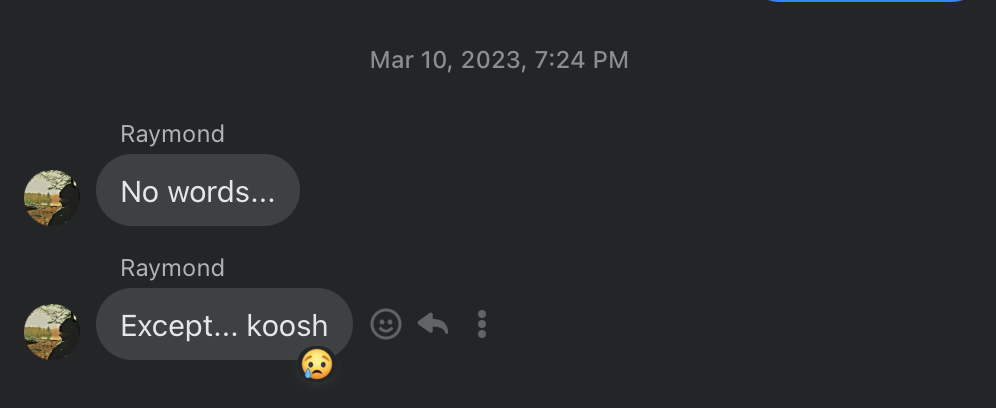
Facebook thread re: Kiosk’s death

“Koosh” is the signature line of the play. It represents the sound that orca make as they exhale and, in so many ways, has come to symbolize the enduring power of these animals in the story of the play.

I’ve been thinking a lot about Kiska since the company began revisiting the play in preparation for our run in Vancouver this September. Since premiering the show last year, the Whale Fall team have been honing the piece and revisiting almost every facet of the script and production. Certainly, there are new scenes that were added. And, of course, there are bits that have been cut. But, honestly, it’s the things we haven’t changed that are most intriguing.

And one of those things is Kiska.

Ray Louter and Stephanie Hope Lawlor in the “Kiska scene” of Whale Fall (photo: S. Near, 2022)

The devastating authenticity of this scene remains pretty much intact from when I first wrote the words inspired by that trip many years ago.

It is my hope that when we take this show out to Vancouver, in front of audiences who may well have had the opportunity to see these magnificent animals swimming in the Georgia Straight or the Salish Sea – literally in their own backyards – that the message of Whale Fall will hits them in the same way that the Kiska scene always hits me.

Good-bye Kiska.

Chronicling Sasquatch

I didn’t set out to write a play about giant, hairy beasts in the forest.

Yes, I’ve always been obsessed by Bigfoot. But who isn’t? Well. Okay, maybe you aren’t. And some of your friends. And your family, too.

Come to think of it, I’m pretty sure a lot of people out there aren’t obsessed with Sasquatch. But you’re probably obsessed by something strange, right? UFOs. True crime. Conspiracy theories. Royal scandals. Harlequin romances. TikTok.

We all have our fixations. Mine just happens to be the prospect that a race (not just an animal) of giant, hairy beings dwell in the wilds of our world. I’ve always been fervent in this belief, too. It’s not up for debate. For me, the proof and the truth is out there. Cue music.

Still, why a play about Sasquatch? Where’s the drama? Where’s the conflict? What’s the inciting incident that leads our protagonist to oppose the obstacles in rising action towards a climax of realization? Can you tell I teach writing for a living? Seriously, though, how exactly do you tell a story about Sasquatch for the stage? So, for a while, my obsession just stayed an obsession and didn’t really inform my creative practice.

But then, in 2019, I started listening to podcasts, specifically a podcast called Sasquatch Chronicles. On my morning commute to work, I became addicted to this show; it hooked me like no other podcast around. Hosted by the downbeat and forthright Wes Germer, the show is essentially a series interviews with those who have encountered Sasquatch, Bigfoot and other cryptid phenomena. Though it examines and offers some analysis of the phenomena, the show really bills itself as “a safe-haven for witnesses to share their encounters.”

What grabbed me about this podcast, and the multitude of those interviewed each week, was the earnestness of every one of the eyewitnesses. No one has ever seemed to be playing any sort of hoax or treats the phenomena as a joke. Indeed, I got the sense that the majority of those interviewed really didn’t want to have an encounter. But now they had, and there was no going back. They all had an experience and it had changed them in an irrevocable and sometimes disturbing way. No matter what you believe, it’s hard not to be intrigued by the voices of these people.

The other intriguing thing about these eyewitness stories was the context and life history that went along with their accounts. It’s true that Wes has interviewed so-called professional ‘Squatch hunters like Russell Acord, Todd Standing, and Matt Moneymaker. But, largely, the bulk of the people interviewed have been faceless individuals Wes only identifies only by first name. Living with their families or on their own, in places all across North America, these eyewitnesses really seem to have nothing to gain from telling their stories. Some have spoken about experiences they’ve recently had. But just as many recall events that have taken place many years ago that they were perhaps afraid to share.

And it was in that word—sharing—that I finally started to find a way into what this play is about. Good drama is all about telling a story. And when I sat down to write Creature I realized I had to throw away some of the lessons I’d been taught, and have taught to others, about playwriting. Maybe this story didn’t need rising action or a climax. Maybe this story was all about recalling a particularly strange incident from my childhood.

So, maybe, I needed just to write this story as if I were sitting across from you, the audience. In front of us is a campfire. It’s late at night. We’re deep in the woods. And I tell you about that time. Years ago. The same kind of night. The same kind of woods. And then I heard it…

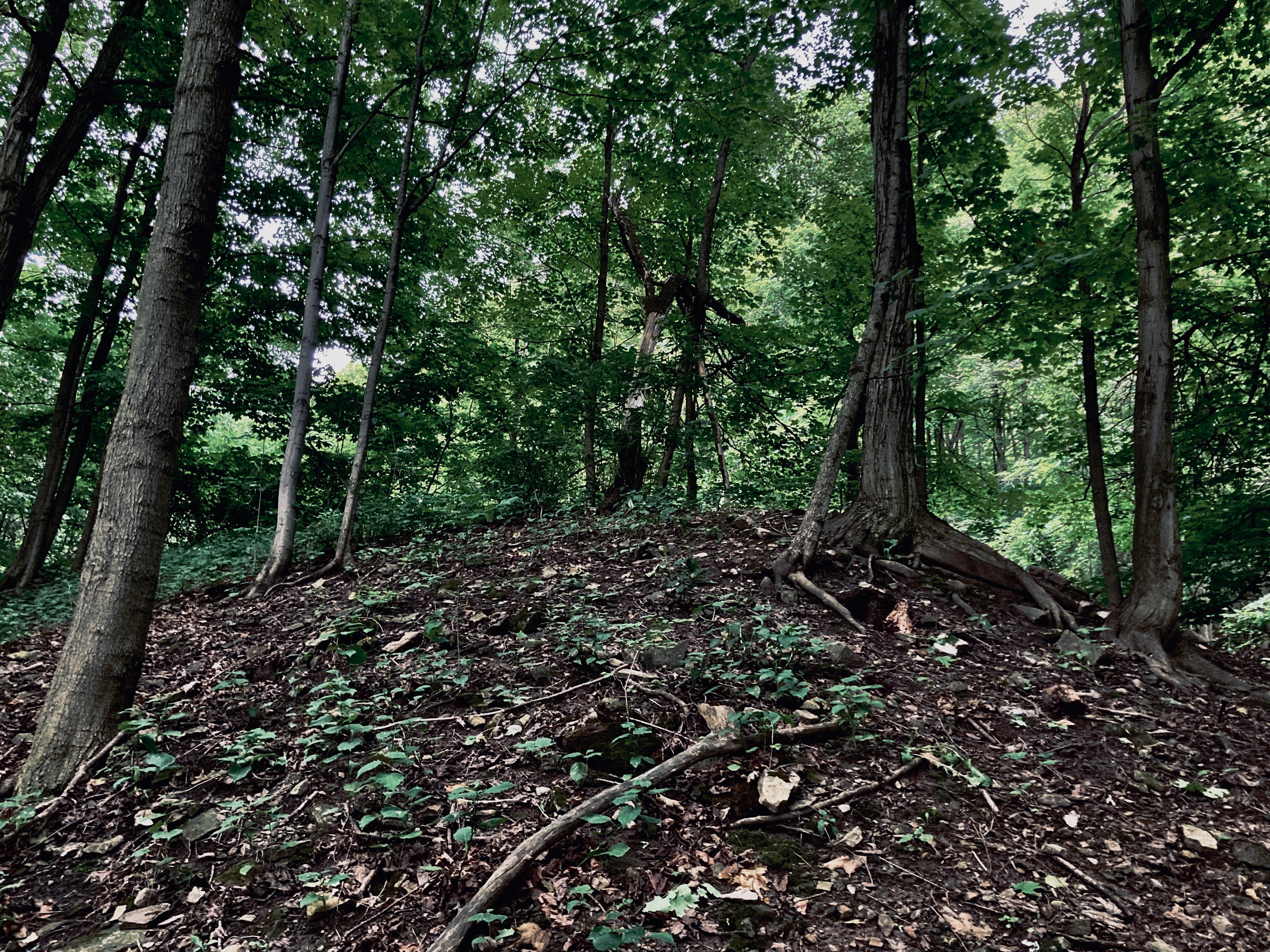
I hope you’ll tune into my production of Creature at the Hamilton Fringe from July 15-25 and ask yourself what you believe.